Get Color Pack: Sort Puzzle
- 4.8
- Rating
- 1.00M
- Installs
- Free
- Price

 Analysis by App-foxy
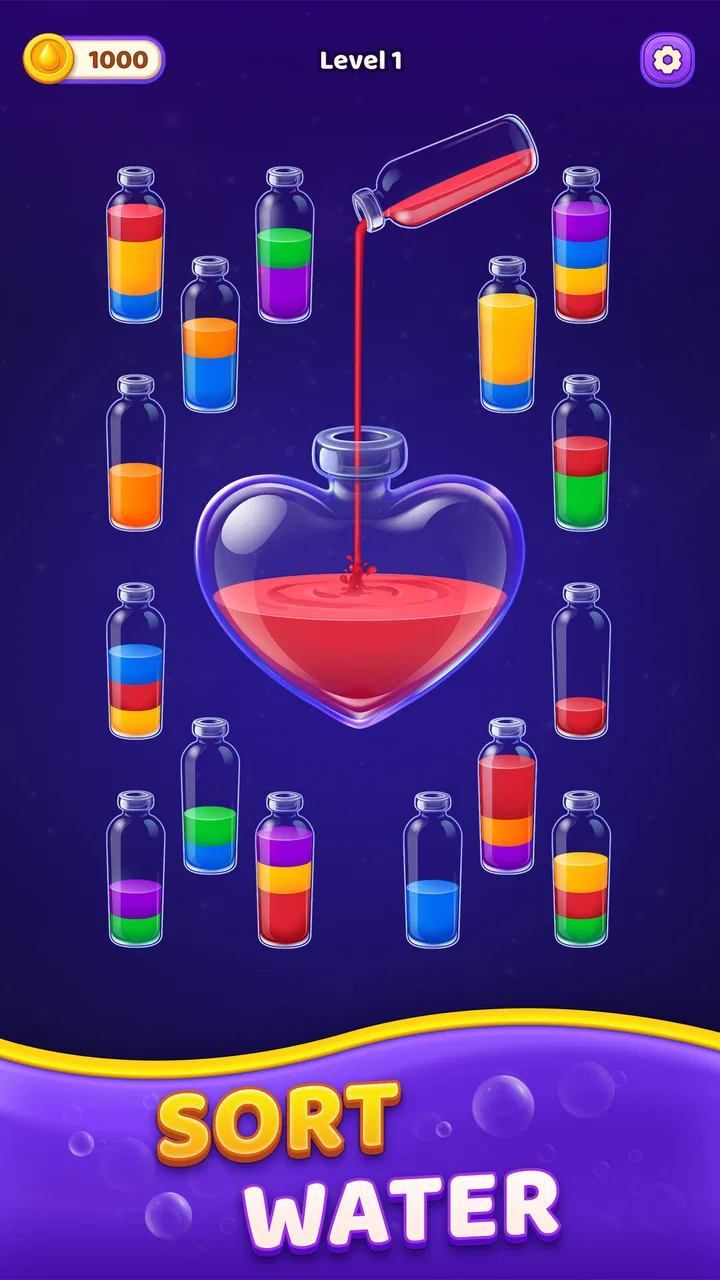
I spent time with Get Color Pack: Sort Puzzle as a compact sorting game, and my first impression was easy to understand: it is built around the pleasure of putting visual disorder into a clean arrangement. The basic appeal is immediate, especially if you enjoy puzzle games that can be understood in seconds rather than explained through a long tutorial. I could open it, look at the current task, and begin making decisions without learning a complicated control scheme.
That simplicity is also the central question. A sorting game has to make its early goals clear, then introduce enough pressure and variation to keep the act of arranging colors from becoming automatic. In my experience, this title is at its best when I treat each puzzle as a small concentration exercise rather than as a deep strategy game. It works well for short sessions, but players looking for a story, a large world, or elaborate mechanics should set their expectations differently.
How the early goals create an inviting start
The opening experience is focused on recognition. You see colored elements that need to be organized, and the goal is understandable without much reading. That matters on a phone because the game does not ask me to invest several minutes before I can discover whether its central idea suits me. The visual task itself provides the invitation: identify what belongs together, decide what should move first, and gradually turn a mixed arrangement into something orderly.
You May Also Like

 Blood Strike: 2.5 Anniversary
Blood Strike’s Loadouts Turn Every Drop Into a Tactical Gamble
A close look at Blood Strike’s custom loadouts: how fast access to signature weapons reshapes its battle royale rhythm, rewards preparation, and narrows the gap between fights.

 Pandora - Music & Podcasts
Pandora’s Music Is Easy to Start, but Harder to Recover
Pandora’s strength is its low-effort path from a seed to a station. Its weak spot is how much confidence it asks you to place in connection, setup, and quiet recovery.

 8 Ball Pool
 Is Built on Rivalries, Rematches, and Routine
A close look at the rivalries, rematches, shared routines, and unanswered safety questions that turn a quick pool match into a persistent mobile community.

 Samsung Music
’s Quiet Strength Is Playing What You Already Own
Its reach comes less from spectacle than from dependable access to a personal library. That simplicity is both the app’s strongest retention engine and its ceiling.

 AccuWeather: Weather Radar
AccuWeather Review: A Quick, Clear Forecast for Everyday Decisions
For everyday plans, the best forecast is the one you can understand quickly. AccuWeather makes rain timing, radar, and local conditions easy to act on, with a few trade-offs.

 Hill Climb Racing
Why Hill Climb Racing Still Turns Crashes Into One More Run
A tiny car, a bumpy hill and one more upgrade: Hill Climb Racing keeps resurfacing because its simple chaos makes every near-miss feel personal.
More From Our News Desk



I found that the first goals are satisfying because they combine a visible problem with a visible solution. When the layout is messy, I have a reason to act; when the colors begin to line up, I can immediately see that my choices are working. This is more rewarding than a puzzle where progress is hidden behind menus or abstract counters. The game’s short description, “Color Pack,” is brief, but the actual experience makes that concept practical through hands-on sorting.
The controls are most comfortable when I slow down instead of tapping rapidly. A useful habit is to scan the whole board before making the first move. I look for colors that are already close to completion and for pieces that may be blocking a more useful arrangement. That small pause prevents the game from becoming a sequence of random touches, and it gives the early levels a little more thought than their cheerful appearance might suggest.
For a realistic everyday use case, I can see myself playing while waiting for an appointment or during a short break when I want something more active than scrolling but less demanding than a long-form game. One or two puzzles can provide a clear beginning and ending, which makes the format convenient. I would not choose it when I need a rich narrative distraction, but I would choose it when I want my attention occupied by a tidy, self-contained problem.
Because the game is free to download and carries an Everyone age rating, it is easy to recommend as a low-commitment experiment for a broad audience. The important qualification is that “easy to start” does not necessarily mean “interesting for everyone over time.” The early goals are accessible, but players who need constant novelty may soon judge the experience by how well later challenges build on the original sorting idea.
What progress feels like during play
The strongest progress signal is visual completion. A board that begins in a scattered state becomes more organized through my choices, so I do not need a complicated reward screen to understand that I am advancing within a puzzle. This is a good match for sorting: the result is its own feedback. I can tell when I am close to finishing because the remaining disorder becomes easier to read.
That kind of feedback supports a calm rhythm. Instead of relying entirely on points or timers, the game lets the arrangement communicate success. I appreciate that approach because it keeps my attention on the puzzle itself. It also means the quality of the experience depends heavily on whether the layouts remain readable. If colors are too similar on a particular screen or the board becomes visually busy, the same minimalist idea can become less comfortable to solve.
One practical technique is to use the nearly completed groups as anchors. I first identify which colors have the clearest destination, then protect those groups while I deal with the less certain pieces. This is not a flashy advanced system; it is simply a way to reduce wasted moves and preserve a mental map of the board. It makes the puzzles feel more deliberate and helps distinguish careful play from tapping based on impulse.
The progression also benefits from separating “I solved the board” from “I understood the best route.” A puzzle can be completed while still leaving me aware that my order of actions was inefficient. That gives a perfection-minded player a reason to replay or improve, even when the immediate objective has already been reached. On the other hand, anyone who only wants a single decisive answer may find that this extra layer is optional rather than strongly motivated.
Tripledot Studios Limited is the developer behind the game, and the title has attracted an average rating of 4.8 from around eighteen thousand ratings. That response suggests the straightforward presentation connects with many players, although a rating alone cannot tell me whether the later pacing will satisfy a particular person. My own view is that the progress signals are clear and pleasant, but they are intentionally modest. The game succeeds by making small improvements feel visible, not by building a large achievement structure around them.
Where the difficulty curve matters
A sorting puzzle becomes engaging when the opening moves are obvious enough to teach the rules but later decisions require planning. The difficulty curve therefore matters more here than a dramatic theme would. I look for layouts that gradually reduce the number of safe choices, force me to consider the order of moves, or make a seemingly helpful action create a problem elsewhere. Those moments are where the basic color arrangement becomes a genuine puzzle rather than a visual cleanup task.
My preferred way to approach a harder board is to avoid committing too early. I examine which spaces or groups will be needed later, then make the move that preserves the most options. This is especially useful when a color appears to have an easy destination but moving it would interfere with another group. Thinking in terms of flexibility gives the game more depth without requiring complicated rules.
The trade-off is that a clean visual style can make difficulty feel uneven if the puzzle’s challenge comes mainly from layout rather than from clearly communicated new ideas. When a board is demanding for the right reason, I feel that I missed a planning detail. When it is demanding because the arrangement is hard to read, frustration replaces satisfaction. For me, the best sessions are those in which the solution becomes clear after reconsidering the order, not after guessing repeatedly.
Players who enjoy classic match-three games may notice a different kind of challenge here. Match-three alternatives usually reward quick pattern recognition, chain reactions, and the excitement of clearing pieces in bursts. This game asks for more restraint. I am not chasing a cascade; I am protecting the structure of a solution. Players who prefer word puzzles may also find the color-based format less mentally varied, but those who like spatial organization should find the central task more immediate.
It is also worth distinguishing this experience from a large logic-puzzle collection. A collection with many unrelated puzzle types can offer broader variety, while this title concentrates on one recognizable activity. That focus is a strength when I want consistency and a weakness when I want surprise. I would choose it over a more complicated puzzle app for a quick break, but I would choose the broader collection for a long session where I expect several different mental challenges.
The current version is 1.4.6, and the game requires Android 6.0 or later. Those details make it approachable for many Android users, but the practical experience still depends on the phone’s screen size and color rendering. On a smaller display, I would play with the device held steadily and avoid rushing, because a sorting game benefits from accurate touches. The game is not a good fit for someone who dislikes visually focused tasks or finds color distinctions tiring.
Pacing, unlocks, and the pressure to continue
The pacing works when each completed puzzle leaves me curious about the next arrangement rather than exhausted by the current one. Short, self-contained challenges naturally encourage “one more” play, especially when the last few moves are close to resolving the board. That is a healthy form of momentum for a casual puzzle, because the desire to continue comes from unfinished thought instead of a complicated narrative cliffhanger.
At the same time, retention can become less comfortable if the game relies too heavily on repetition. Sorting is inherently satisfying, but the satisfaction can flatten if new boards feel like the same task with only cosmetic changes. I pay attention to whether the challenge asks me to rethink my method or merely repeat a familiar sequence. The former keeps me engaged; the latter turns the game into background activity.
The free model also deserves a practical look. The game is free, with in-app purchases ranging from $0.99 to $89.99 per item. That does not automatically make the experience unsuitable, but it means I would approach optional spending carefully. My advice is to decide before playing whether you want a completely no-cost pastime and to avoid treating a difficult puzzle as a reason to buy something immediately. The core appeal should stand on its own for a player who does not want to spend.
This is one of the areas where the game may not be right for everyone. If you prefer a premium puzzle with a single upfront purchase and no purchase prompts, another option may feel more comfortable. Likewise, if you are highly sensitive to interruptions or expect every stage to introduce a substantially different mechanic, a focused sorting game may not provide enough variety. I would recommend it more confidently to someone who values quick access, clear visual goals, and the ability to stop after a small amount of play.
A useful personal rule is to play in deliberate sessions rather than opening it automatically whenever I am bored. I give myself a small window, focus on the board, and stop when the puzzles begin to feel repetitive. That approach preserves the satisfying part of the loop and prevents the game from becoming an endless habit with little mental reward. It also makes it easier to judge whether the later progression is genuinely improving or simply extending the same activity.
Who will enjoy the progression, and who should skip it
I think the best audience is someone who likes order, visual patterns, and low-friction puzzle rules. It can suit casual players, people who want a quiet break, and families looking for an Everyone-rated game that does not depend on a complex story. The straightforward objective also makes it approachable for someone who normally avoids puzzle games because they seem intimidating at first.
I would be more cautious recommending it to competitive players who need leaderboards, elaborate scoring, or a strong sense of mastery beyond completing boards. I would also hesitate with players who want an adventure, character development, or a constantly changing set of activities. The game’s identity is narrow on purpose, and that focus will feel either refreshing or limiting depending on what you want from a mobile game.
Another important distinction is attention style. If you enjoy studying a layout and planning several actions ahead, the game can become more interesting as the boards demand restraint. If you prefer immediate reactions and rapid rewards, the pauses needed for good sorting may feel slow. Neither response is wrong; it simply shows that the same pacing choice can be a strength for one player and friction for another.
For younger players, the Everyone rating is reassuring from an age-category perspective, but I would still judge the experience by the individual’s comfort with color-based visual tasks. For adults, the same simplicity can be useful after work, during travel, or between errands. I would not describe it as a universal stress reliever, because a stubborn layout can be mildly frustrating, but the ability to focus on one contained problem can make it a pleasant reset.
My progression verdict after extended play
My overall judgment is that the game understands the value of a clear early goal and visible progress. The act of turning a mixed color layout into an organized result is easy to grasp, and the best puzzles encourage me to plan instead of merely react. The progression is most convincing when later boards make me protect future options and reconsider move order. That is where the simple premise earns its place among mobile puzzle games.
Its limitations are just as clear. The focused format may not deliver enough variety for long sessions, and the free-to-play structure means I would keep an eye on optional purchases rather than play without thinking about them. The game also depends on visual clarity and personal patience; if either is a poor match, the clean presentation will not solve the problem. I see it as a compact sorting experience, not as a replacement for a deep logic game.
With over one million installs, it has clearly found a substantial casual audience, and I understand why. The entry barrier is low, the objective is readable, and the visual completion gives every successful puzzle a small sense of closure. I would recommend trying it if you want a free puzzle for short, focused sessions and enjoy improving your approach from one arrangement to the next.
My final recommendation is simple: choose it for tidy visual problem-solving, not for endless mechanical variety. I would install it for waiting-room breaks, brief evening sessions, or moments when I want a puzzle that starts quickly and finishes cleanly. I would skip it in favor of a richer alternative if I needed a story, competitive depth, or a wider menu of puzzle types. Within its chosen lane, it is approachable and satisfying, provided the repetition and purchase model fit your expectations.
FAQs for Get Color Pack: Sort Puzzle
01What is Get Color Pack: Sort Puzzle?
Get Color Pack: Sort Puzzle is a casual logic game based on organizing colored items into matching groups. Each level presents a sorting challenge that requires you to plan moves carefully, use empty spaces effectively, and complete the arrangement with as few mistakes as possible. The simple rules make it easy to start, while later stages gradually introduce more colors and more demanding layouts.
02How do you play Get Color Pack: Sort Puzzle?
The gameplay is based on tapping or moving colored pieces, containers, or objects so that identical colors are grouped together. You normally need to consider the order of your moves because placing one color in the wrong position can block access to another. Before downloading, remember that success depends more on logical planning and patience than on fast reactions or complicated controls.
03Is Get Color Pack: Sort Puzzle free to download and play?
The game can generally be downloaded without an upfront purchase, but the exact monetization options may vary by version and device. Players may encounter advertising, optional purchases, or features connected to rewards and hints. It is worth checking the current Google Play or App Store listing for confirmed information about ads, in-app purchases, and whether any content requires payment.
04Does Get Color Pack: Sort Puzzle work offline?
Many sorting-puzzle levels can usually be played without a continuous internet connection, which makes the game suitable for short sessions while traveling or when mobile data is unavailable. However, advertisements, cloud saving, updates, leaderboards, or certain bonus features may require internet access. For the most reliable experience, open the game online at least once after installation and check its current offline behavior.
05Is Get Color Pack: Sort Puzzle suitable for all ages?
Get Color Pack: Sort Puzzle is designed around non-violent, easy-to-understand color-matching and sorting mechanics, so it can appeal to both children and adults. Nevertheless, younger players may need help with advertisements, optional purchases, or increasingly difficult levels. Parents should review the store age rating and device settings, especially if the game is installed on a child’s phone or tablet.
Pros
- Simple color-sorting rules make it easy to learn quickly.
- Short levels are convenient for quick breaks or casual play.
- Increasing difficulty keeps the puzzle challenge engaging.
- Minimalist visuals make the colored tubes easy to distinguish.
- Offline play is useful when you have no internet connection.
Cons
- Later puzzles can feel repetitive after extended play sessions.
- Small color differences may be difficult to spot on some screens.
- Mistakes can become frustrating when levels require precise planning.
- Ads may interrupt the experience
- especially between puzzle attempts.
- The game offers limited variety beyond its core sorting mechanic.

Get Color Pack: Sort Puzzle
Gallery